In the sixth talk of the Science of Community track we organized for FOSSY, independent FOSS researcher Darius Kazemi described the results of an interview study to learn from the moderation teams of decentralized social network servers. One of Darius’ key observations is the extensive compliance and legally-required work that running such a server requires.
This is part 6 of an 8-part series sharing highlights from the Science of Community track at FOSSY. Visit the FOSSY site for more bio details and an abstract of the talk.
In the final talk of the Science of Community track we organized for FOSSY, Computer Science professor and FOSS researcher Dr. Bogdan Vasilescu described his team’s work to understand how developers think about abandoned dependencies. One of the key insights from this work is that abandonment of dependencies is quite common, but that updating a package to remove the abandoned dependencies is very slow — and that one of the factors that drives faster replacement is when projects explicitly announce that they are ending maintenance.
This is part 8 of an 8-part series sharing highlights from the Science of Community track at FOSSY. Visit the FOSSY site for more bio details and an abstract of the talk.
In the fifth talk of the Science of Community track we organized for FOSSY, Dr. Kaylea Champion describes a series of research results on both how to build high-quality FOSS and how to sustain a community alongside it. One of her key insights is that a great community is no guarantee of a high-quality project — and to serve the public, we need both.
This is part 5 of an 8-part series sharing highlights from the Science of Community track at FOSSY. Visit the FOSSY site for more bio details and an abstract of the talk.
In the fourth talk of the Science of Community track we organized for FOSSY, principal developer advocate Paige Cruz shared the results of her investigation into the subject of how we can all do a better job of asking questions of one another in FOSS communities. One of her key insights is to invite us to engage with the perspective of those who might answer our question, and to think critically about what details we include and whether they really help others understand and respond — for example, a screenshot of our code can’t be copy pasted and might be unreadable, but a screenshot of a UI bug might replace wordy description.
This is part 4 of an 8-part series sharing highlights from the Science of Community track at FOSSY. Visit the FOSSY site for more bio details and an abstract of the talk.
In the third talk of the Science of Community track we organized for FOSSY, FOSS leader Ben Ford described his experience navigating the changes in his role when the Puppet project’s commercial partner was acquired by a private equity company. One of the essential takeaways from this talk is the different perspective towards community that a FOSS company takes versus a private equity company, and the challenge of communicating value in this context.
This is part 3 of an 8-part series sharing highlights from the Science of Community track at FOSSY. Visit the FOSSY site for more bio details and an abstract of the talk.
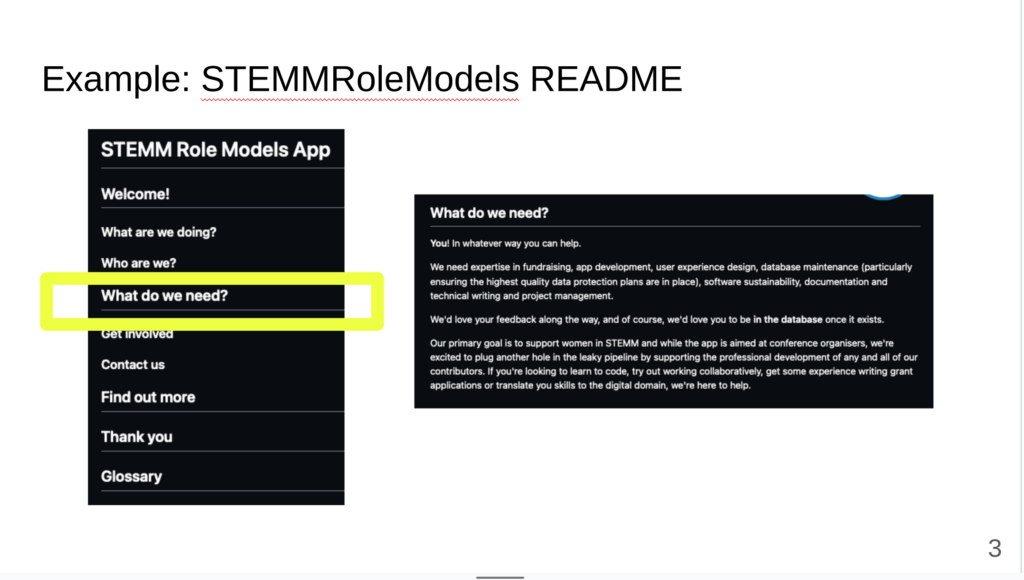
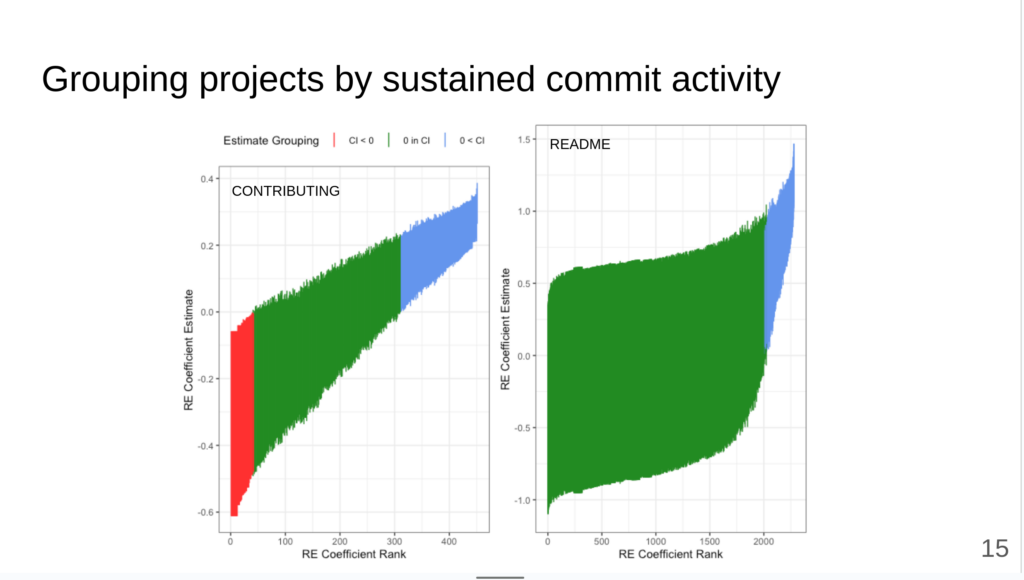
In the second talk of the Science of Community track we organized for FOSSY, CDSC PhD student Matthew Gaughan shared his research to understand how communities actually use README and CONTRIBUTING documents. Although guides to FOSS communities often recommend these documents be extensive and used as part of welcoming new contributors, we find that READMEs are often quite preliminary, and that CONTRIBUTING guides are often a reaction to an influx of contributions.
Excerpt from Matt’s presentation, Graph shows model coefficients for longitudinal activity data around governance document introduction for 2200+ FOSS projects packaged in the Debian GNU/Linux distribution.
This is part 2 of an 8-part series sharing highlights from the Science of Community track at FOSSY. Visit the FOSSY site for more bio details and an abstract of the talk.
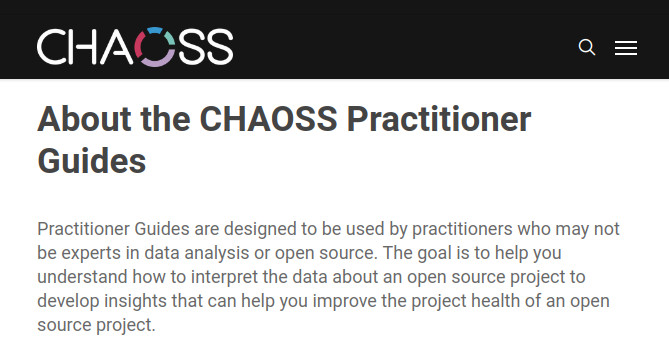
Back in July, we kicked off the FOSSY conference Science of Community track with a talk from Dr. Dawn Foster. Dr. Foster shared an update on the work of the CHAOSS project to empower communities to use metrics to understand and improve their practices. Their Practitioner Guide Series, coupled with FOSS analytical tools, will help any community get started on their metrics journey.
This is part 1 of an 8-part series sharing highlights from the Science of Community track at FOSSY. Visit the FOSSY site for more bio details and an abstract of the talk.
On September 27th, we held our 9th Science of Community Dialogue with Sohyeon Hwang (Northwestern) and Seth Frey (University of California-Davis) sharing their research and insights on how communities self-govern amidst competing pressures in complex, multi-layered environments.
Sohyeon presented her work on “Trust and Friction: Community Governance and Privacy on Decentralized Social Media”. Her research aimed to answer the questions of “what aspects of community governance do communities use to shape privacy expectations?” and “how does the decentralized nature of that platform aid or undermine those expectations?”
Seth discussed his research on Apache, looking to answer the question “do things run the way they say they run?” His research explored the relationships between rules and regulations, how often these same rules as discussed among the community, and what exactly is being governed.
All in all, it was a wonderful dialogue and we greatly appreciate Sohyeon and Seth taking the time to share their research, as well as all our attendees joining us for a great discussion.
Interested in free and open source software? Want to hear insights from researchers, community leaders, contributors, and advocates working on and with FOSS?
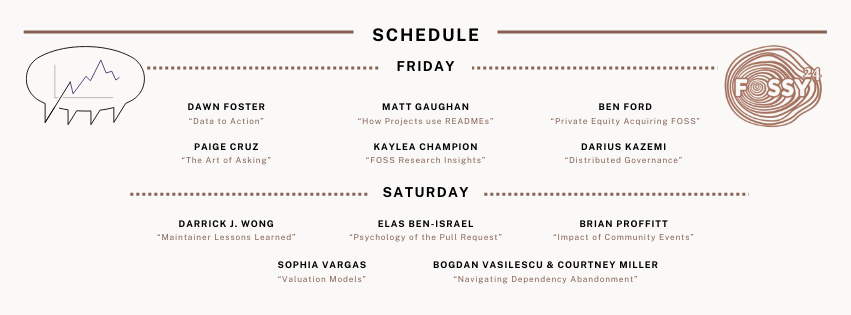
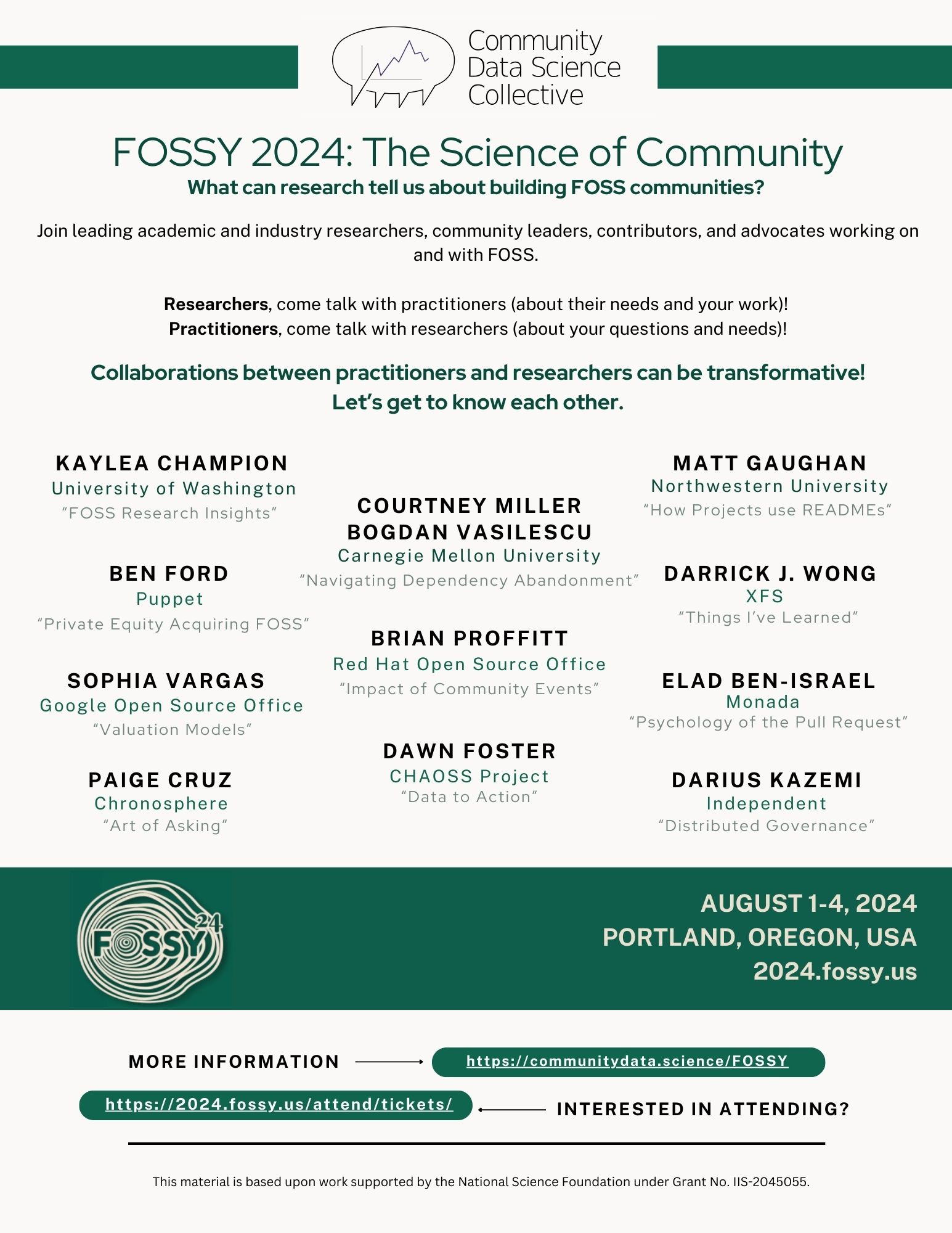
We will be running the Science of Community track on Friday August 2nd and Saturday August 3rd. We’re excited to have a number of awesome presenters speaking about their work. Check out the schedule below:
The Science of Community track is inspired by the CDSC Science of Community Dialogues, which aim to bring together practitioners and researchers to discuss scholarly work that is relevant to the efforts of practitioners. As researchers, we get so much from the communities we work with and study and we want them to also learn from the research they so generously take part in. While the Dialogues cover a broad range of topics and communities, FOSSY presentations focus on how that work related to free and open source software communities, projects, and practitioners.
Collaborations between practitioners and researchers can be transformative! Let’s get to know each other.
Tickets are still available at every price tier, check them out here.
We will be running the Science of Community track on Friday August 2nd and Saturday August 3rd. Check out the full schedule here.
We’re excited to have a number of really amazing speakers presenting their work. Check out the list below:
Kaylea and Matt will be presenting again!
The Science of Community track is inspired by the CDSC Science of Community Dialogues, which aim to bring together practitioners and researchers to discuss scholarly work that is relevant to the efforts of practitioners. As researchers, we get so much from the communities we work with and study and we want them to also learn from the research they so generously take part in. While the Dialogues cover a broad range of topics and communities, FOSSY presentations focus on how that work related to free and open source software communities, projects, and practitioners.
We hope to see you at FOSSY. Even if you can’t make it to our sessions, we’ll be at the conference so stop by and say hello!