Worried you didn’t submit your FOSSY proposal on time? Well fear not, the deadline has been extended to Tuesday, June 18th. Submit your proposal today!
Does your work touch open source, communities, technology, or cooperation? Do you want to help bridge the gaps between research and practice? Join us at the Free and Open Source Software Yearly conference (FOSSY) this summer!
We’ll be running the Science of Community track, and are looking for presenters to speak to an audience of FOSS practitioners, developers, community organizers, contributors, and people just generally into and curious about FOSS.
FOSSY is a low-stress opportunity to talk to people who your work can benefit. For topics, consider presenting implications from past papers, synthesizing work from your field overall, or floating ideas and problems (lightning talks! long talks! short talks!). A full track description and answers to common questions is available on our wiki.
Does your work touch open source, communities, technology, or cooperation? Do you want to help bridge the gaps between research and practice? Join us at FOSSY! The Free and Open Source Software Yearly conference (FOSSY) is back this summer and the call for proposals is open!
We’ll be running the Science of Community track, and are looking for presenters to speak to an audience of FOSS practitioners, developers, community organizers, contributors, and people just generally into and curious about FOSS.
The Science of Community track is inspired by the CDSC Science of Community Dialogues, which bring together practitioners and researchers to discuss scholarly work that is relevant to the efforts of practitioners. As researchers, we benefit so much from the communities we work with and study and we want them to also learn from the research they so generously take part in. While the Dialogues cover a broad range of topics and communities, FOSSY presentations will focus on how that work relates to free and open source software communities, projects, and practitioners.
FOSSY is a low-stress opportunity to talk to people who your work can benefit. For topics, consider presenting implications from past papers, synthesizing work from your field overall, or floating ideas and problems (lightning talks! long talks! short talks!). A full track description and answers to common questions is available on our wiki.
How can we create more trustworthy and accountable social media that support diverse communities? Decentralized social media—systems that allow users to connect and communicate across independent services like Mastodon or BlueSky—offer promising alternatives to centralized commercial platforms like Instagram, TikTok, or X. However, decentralized social media also face urgent design challenges, especially when it comes to content integrity, protecting community trust and safety, and forging collective governance. What happens when there is no central authority to review posts or ban abusive users? How can networks of autonomous communities build and adopt systems to govern effectively? What critical infrastructure can prevent the pervaisve harms of existing social media and support the integrity of public discourse?
Join Northwestern’s Center for Human-Computer Interaction + Design (HCI+D) and the Community Data Science Collective (CDSC) for an engaging conversation about the challenges and opportunites of decentralized social media on May 23rd from 4 to 5:15 p.m. CST. This panel features designers, leaders, and researchers involved in federated social media and will address opportunities for effective design and governance in this space.
Panelists include Jaz-Michael King, Bryan Newbold, and Christine Lemmer-Webber. Short presentations will be followed by discussion and Q&A moderated by Aaron Shaw (Northwestern HCI+D, CDSC).
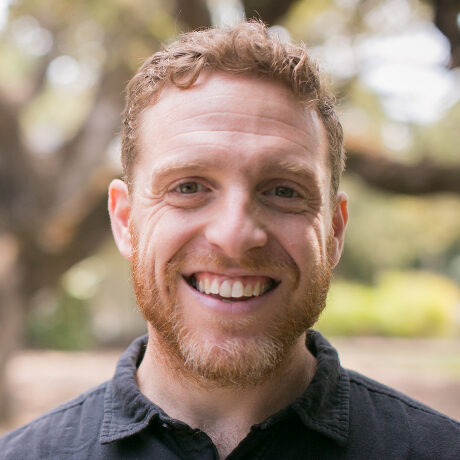
Moderator: Aaron Shaw, photograph by Nikki Ritcher Photography
Speaker: Christine Lemmer-Webber, Executive Director of Spritely Networked Communities Institute
Christine has devoted her life to advancing user freedom. Realizing that the federated social web was fractured by a variety of incompatible protocols, she co-authored and shepherded ActivityPub‘s standardization. She has also contributed to many other free and open source projects, including co-founding MediaGoblin.
Christine established the open source Spritely Project to solve known problems in existing centralized and decentralized social media platforms and to re-imagine the way we build networked applications – work that now continues here at the institute under her guidance as Executive Director.
Speaker: Jaz-Michael King, Executive Director of IFTAS (Federated Trust & Safety)
An accomplished professional with an extraordinary record of enabling data-driven decisions, developing innovative products, creating new business opportunities, driving strong operational performance, and building high-performing, agile teams. Highly versatile, with extensive experience in data and technology from a privacy, improvement, and reporting perspective, Jaz has a proven record in building solutions for non-profit programs. As Executive Director of IFTAS, Jaz is now focused on independent, open Social Web activities, with the aim of creating #BetterSocialMedia by supporting trust and safety at scale in federated social media networks.
Speaker: Bryan Newbold, Protocol Engineer at BlueSky
Bryan works at Bluesky, a startup company building a federated social media protocol called “atproto”. Until a few months ago he worked at the Internet Archive collecting scientific research datasets and publications, and created scholar.archive.org. And before that he worked on infrastructure at Stripe, attended the Recurse Center in New York City, and built Atomic Magnetometers for a small New Jersey company called Twinleaf.
Over that same time period, Bryan climbed up and down the ladder of abstraction, obtaining an undergraduate degree in physics (at MIT), operating under-ice robots in Antarctica, developing open hardware lab instrumentation for large-scale brain probing (at LeafLabs), cataloging hundreds of millions of electronics components (at Octopart), and improved production service reliability at Stripe (a financial infrastructure start-up).
Bryan is a transplant from the East Coast and enjoys the road biking, large trees, generous salads, used bookstores, and world-class tech non-profits. This will be his third year serving on the Code of Conduct team at DWeb Camp.
Welcome to a bonus round of our series spotlighting the excellent talks we were fortunate enough to host during the Science of Community track at FOSSY 23!
Eriol Fox presented their talk, “Community lead user research and usability in Science and Research OSS: What we learned,” (due to scheduling issues, this landed in the Wildcard track, but it was definitely on-topic for Science of Community! Eriol introduced us to their work exploring how scientists and researchers think about open source software, including differences in norms and motivations as well as challenges around the structure of labor. They also brought along copies of their 4 super cool zines from this project!
You can watch the talk HERE and learn more about Eriol’s work HERE.
Welcome to part 7 of a 7-part series spotlighting presentations from the Science of Community track at FOSSY 23!
In this interactive session, Dr. Benjamin Mako Hill, Dr. Aaron Shaw, and Kaylea Champion hosted a series of conversations with FOSS community members about finding research, putting it to use, and building partnerships between researchers and communities!
This talk was (intentionally!) not recorded, but we’ve synthesized the resources we shared into this wiki page.
Welcome to part 6 of a 7-part series spotlighting the excellent talks we were fortunate enough to host during the Science of Community track at FOSSY 23!
In this talk, Dr. Guizani shared her work to understand the motivation for companies to participate in open source software development, encompassing the perspective of both small and large firms.
You can watch the talk HERE and learn more about Dr. Guizani HERE.
Welcome to part 5 of our 7-part series reviewing all the great talks we were fortunate enough to host during the Science of Community track at this year’s FOSSY.
In this talk, Dr. Kajita introduced us to the work being done as part of the Apereo (formerly JA-SIG/Sakai) to create FOSS platforms to serve as academic and administrative infrastructure in higher education. Research data management is a skill that emerging scholars must learn to do modern quantitative research — and this skill can be scaffolded and tracked via the Karuta portfolio tool.
Watch the talk HERE, learn more about Karuta HERE, and learn more about Dr. Kajita HERE.
Welcome to part 4 of a 7-part series spotlighting the excellent talks we were fortunate enough to host during the Science of Community track at FOSSY 23!
Kaylea presented on her new research project to identify how packages come to be undermaintained, in particular investigating assumptions that it’s all about “the old stuff” — old packages, old languages. It turns out that’s only part of the story — older packages and software written in older languages do tend to be undermaintained, but old packages in old languages — the tried and true, as it were — do relatively well!
Watch the talk HERE and learn more about Kaylea’s work HERE.
Welcome to part 3 of a 7-part series spotlighting the excellent talks we were fortunate enough to host during the Science of Community track at FOSSY 23!
Dr. Anita Sarma gave us an excellent introduction to her and her team’s work on understanding how to make FOSS more inclusive by identifying errors in user interaction design.
Matt Gaughan delivered a rapid introduction to his dataset highlighting the numerous places where the Linux Kernel is using unsafe memory practices.
You can watch the talk HERE and learn more about Dr. Sarma HERE.
Welcome to part 2 of a 7-part series spotlighting the excellent talks we were fortunate enough to host during the Science of Community track at FOSSY 23!
Matt Gaughan delivered a rapid introduction to his dataset highlighting the numerous places where the Linux Kernel is using unsafe memory practices.
You can watch the talk HERE, check out the dataset HERE and learn more about Matt HERE.