FOSSY 2025: Call for Proposals!


Does your work touch open source, communities, technology, or cooperation? Do you want to help bridge the gaps between research and practice? Join us at FOSSY! The Free and Open Source Software Yearly conference (FOSSY) is back this summer and the call for proposals is open!
fossy 2025
portland, OR, USA
july 31 - august 3, 2025
science of community track
organized by the community data science collective (cdsc) and the digital infrastructure insights fund (d//f)


“I always enjoy the blend of researcher and contributor perspectives in the Science of Community track. The presentations are always great, surpassed only by the follow up conversations in the hall afterwards!” – Matt Gaughan, CDSC member and PhD student

We’ll be running the Science of Community track, and are looking for presenters to speak to an audience of FOSS practitioners, developers, community organizers, contributors, and people just generally into and curious about FOSS. 

The Science of Community track is inspired by the CDSC Science of Community Dialogues, which bring together practitioners and researchers to discuss scholarly work that is relevant to the efforts of practitioners. As researchers, we benefit so much from the communities we work with and study and we want them to also learn from the research they so generously take part in. While the Dialogues cover a broad range of topics and communities, FOSSY presentations will focus on how that work relates to free and open source software communities, projects, and practitioners.

FOSSY is a low-stress opportunity to talk to people who your work can benefit. For topics, consider presenting implications from past papers, synthesizing work from your field overall, or floating ideas and problems (lightning talks! long talks! short talks!). A full track description and answers to common questions is available on our wiki.

The CFP deadline is April 28th and uses this form.
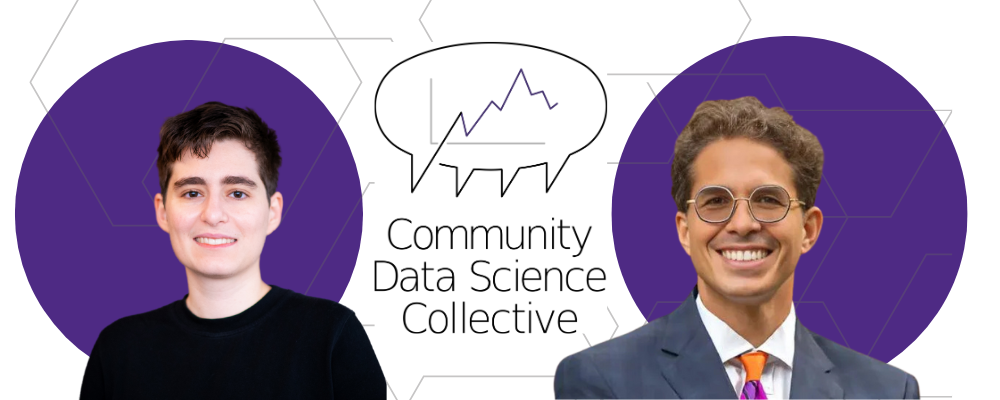
Community Dialogue Wrap Up: Zarine Kharazian and Paul Gowder Discussed the Role of Community Governance

We held our 11th Science of Community Dialogue on April 4th, with Zarine Kharazian (University of Washington) and Professor Paul Gowder (Northwestern University) sharing their research on misinformation and propaganda in online communities, limitations of approaches that neglect community governance, and insights on democratizing platforms and society.

Zarine kicked off the conversation by highlighting recent events regarding allegations and attacks on Wikipedia, and how these legitimacy attacks affect communities engagement with encyclopedic knowledge and collective sense-making infrastructures. She explored organizational and institutional approaches that could enable communities to effectively steward information commons in the face of these attacks.

In his book The Networked Leviathan, Paul advocated for more participatory and multi-level governance as a corrective to the “democratic deficit” and lack of accountability of social media platforms. In this dialogue, he discussed threats and updates to this framework in light of recent developments.

Thank you to everyone who joined us and participated in this insightful and timely conversation. We greatly appreciate Zarine and Paul taking the time to share their views and research on community governance.

Community Dialogue on The Role of Community Governance

Join the Community Data Science Collective (CDSC) for our 11th Science of Community Dialogue! This Community Dialogue will take place on April 4th at 12:00 pm CT. This Dialogue focuses on resisting online information manipulation and the role of community governance. Professor Paul Gowder (Northwestern University) will join Zarine Kharazian (University of Washington) to present recent research on topics including:

  • Exploring threats like misinformation and propaganda in online communities.
  • Limitations of approaches that neglect community governance.
  • Tradeoffs in governance models, such as those of Facebook, Bluesky, and Wikipedia.
  • Strategies to protect information commons.
  • Participatory governance for platforms.
  • Insights on democratizing platforms and society.

A full session descriptions is on our website. Register online.

What is a Dialogue?

The Science of Community Dialogue Series is a series of conversations between researchers, experts, community organizers, and other people who are interested in how communities work, collaborate, and succeed. You can watch this short introduction video with Aaron Shaw.

What is the CDSC?

The Community Data Science Collective (CDSC) is an interdisciplinary research group made of up of faculty and students at the University of Washington Department of Communication, the Northwestern University Department of Communication Studies, the Carleton College Computer Science Department, the School of Information at UT Austin, and the Purdue University School of Communication.

Learn more

If you’d like to learn more or get future updates about the Science of Community Dialogues, please join the low volume announcement list.

Decentralization and the social web revisited

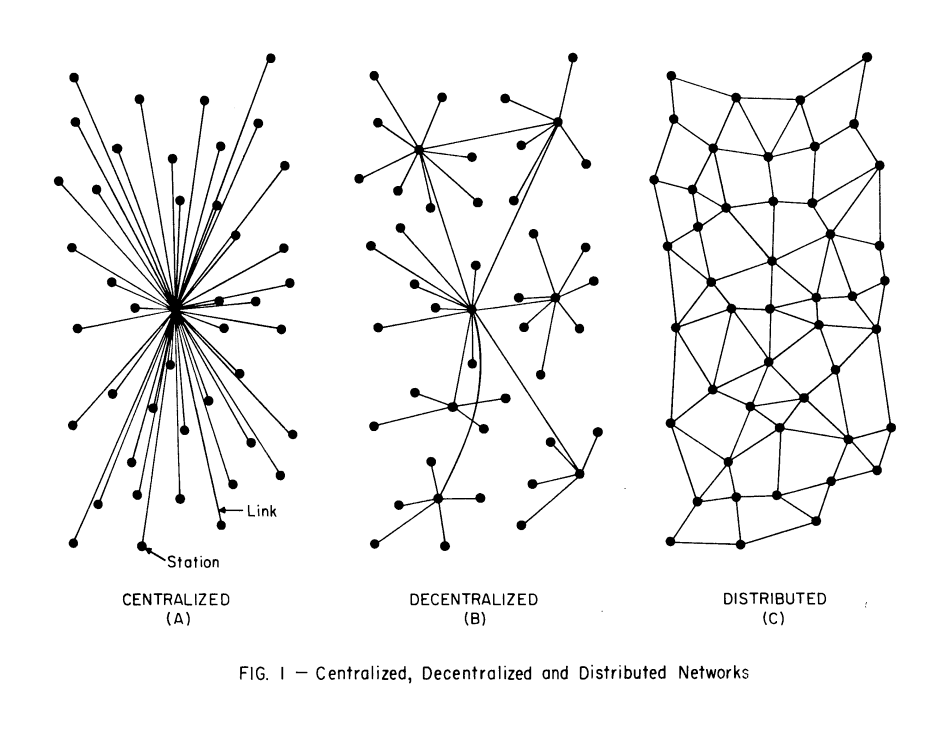
Diagram of centralized, decentralized (hierarchical), and distributed communications networks from Paul Baran's 1964 article "On distributed communications networks."
Figure from Paul Baran’s 1964 article “On distributed communications networks” (https://doi.org/10.1109/TCOM.1964.1088883) and referenced by Christine Lemmer-Webber.

Last Spring, I hosted a “thought leader dialogue” on decentralizing social media through the Northwestern Center for Human-Computer Interaction and Design (HCI+D). It was fantastic and I highly recommend you check out the video.

Afterwards, two of the eponymous “thought-leaders” who headlined that session, Christine Lemmer-Webber and Bryan Newbold followed up with each other in a series of blogposts about decentralization, Bluesky, and the Fediverse.

I recently re-read these while preparing for a guest lecture in an undergraduate class here at NU. Fair warning: Despite the subtext of a debate about systems mainly used for micro-blogging, the posts are very long. That said, if you care about these topics (or are maybe just curious to learn more), all three are pure gold.

It helps to understand a bit about exactly who Christine and Bryan are, or more specifically, why they have among the very most informed and interesting perspectives on the topic. Christine helped to create the ActivityPub protocol and standard that is at the heart of the Fediverse (Mastodon, Lemmy, Pixelfed, PeerTube). She currently leads the Spritely Institute pursuing the design and implementation of the next generation of decentralized communication tech. Bryan is the protocol engineer at Bluesky and, as such, one of the leaders building out the AT Protocol, which powers Bluesky and a whole other small-but-seemingly-growing ecosystem of applications.

The crux of their conversation revolves around the competing visions for the future of the social web being pursued within the respective ActivityPub and AT Protocol “universes.” The posts underscore some of the more profound differences between the two, in particular the questions around “shared heap” vs. “message passing” architectures, the relative degree of (de)centralization each system affords (this is where the diagram originally created by Paul Baran and reproduced at the top of this post comes in), and (more implicitly) the theories of change motivating the design and implementation choices prioritized in their respective work.

It’s worth nothing that both Bryan and Christine are very careful and intentional to call out the overlaps between ActivityPub and AT Proto as well. I also appreciate how respectful and thoughtful they each are given that there are some substantive and high stakes areas of disagreement being addressed in their conversation.

If you read the posts (and I hope you do!) and want to share your responses, please do so in the comments, via email, Toot, Skeet, or sundry other means. There are several of us in the lab pursuing work in these areas and I’m eager to understand perspectives on the topic.

Dr. Yoel Roth: Online Safety and Security

On Oct. 23, 2024, Dr. Yoel Roth gave a lecture titled as “Decentralizing online safety and security: The promises and perils of federated social media” hosted by the Department of Human-Centered Design and Engineering at University of Washington, and a number of CDSC faculty and students were present and discussed issues of digital governance with Dr. Roth. 

Years of dedicated research, activism, regulatory efforts, and investment by civil society and technology companies have increased awareness and established some control over the harmful impacts of social media platforms. Today, as social media undergoes its most significant transformation in over a decade—with alternative platforms like Mastodon, Bluesky, and Threads gaining traction in the wake of Twitter’s decline—there is optimism about these new platforms and their potential for alternative governance models that offer users greater empowerment. Dr. Roth has highlighted how self-organizing practices in these emerging communities are constructing norms for content moderation in decentralized platforms, which resonates with a number of research conducted by our research group (see Colglazier, TeBlunthuis, & Shaw, 2024). 

However, these platforms retain many of the same design features and risks for misuse as mainstream platforms, yet lack the robust moderation and detection systems that have been painstakingly developed elsewhere. Additionally, significant technological, governance, and financial challenges hinder the development of these essential safeguards. Drawing on empirical research into platform moderation capacities, Dr. Roth examines the complex outcomes of this transformation in social media and suggests the following potential solutions for collective safety and addressing security risks identified: (1) institutionalize shared responses to critical harms, (2) build transparent governance into the system, (3) invest in open-source tooling, and (4) enable data sharing across instances (Roth & Lai, 2024). 

References

Colglazier, C., TeBlunthuis, N., & Shaw, A. (2024, May). The Effects of Group Sanctions on Participation and Toxicity: Quasi-experimental Evidence from the Fediverse. In Proceedings of the International AAAI Conference on Web and Social Media (Vol. 18, pp. 315-328).Roth, Y., & Lai, S. (2024). Securing federated platforms: Collective risks and responses. Journal of Online Trust and Safety, 2(2).

FOSSY 2024 Wrap Up: Sophia Vargas on “A review of valuation models and their application to open source models”

In the seventh talk of the Science of Community track we organized for FOSSY, Google FOSS researcher Sophia Vargas offered an overview of different strategies for measuring the value of open source (particularly in the context of a company thinking about how to engage with FOSS).

Some of Sophia’s key insights are: models for measuring one-time cost are relatively widespread (but depend on outcome metrics like lines of code rather than difficulty); understanding the cost of maintenance and community is still in formative stages; and that business leaders can make use of research-grounded models developed to measure value and risk in an academic context into decisionmaking tools within a business context.

This is part 7 of an 8-part series sharing highlights from the Science of Community track at FOSSY. Visit the FOSSY site for more bio details and an abstract of the talk.

Check Out the PhD Q&A Session!

Missed the prospective student Q&A session? Fear not, you can still hear from our faculty members, see a few examples of current students research, and listen to answers for our prospective student audience.

You can find more resources about the Community Data Science Collective below:

Still have questions for our group? Check out our people page to learn more about the faculty, students, and other members of the collective.

FOSSY 2024 Wrap Up: Darius Kazemi on “Community governance models on small-to-mid-size Mastodon servers

In the sixth talk of the Science of Community track we organized for FOSSY, independent FOSS researcher Darius Kazemi described the results of an interview study to learn from the moderation teams of decentralized social network servers. One of Darius’ key observations is the extensive compliance and legally-required work that running such a server requires.

This is part 6 of an 8-part series sharing highlights from the Science of Community track at FOSSY. Visit the FOSSY site for more bio details and an abstract of the talk.

FOSSY 2024 Wrap Up: Bogdan Vasilescu on “Navigating Dependency Abandonment”

In the final talk of the Science of Community track we organized for FOSSY, Computer Science professor and FOSS researcher Dr. Bogdan Vasilescu described his team’s work to understand how developers think about abandoned dependencies. One of the key insights from this work is that abandonment of dependencies is quite common, but that updating a package to remove the abandoned dependencies is very slow — and that one of the factors that drives faster replacement is when projects explicitly announce that they are ending maintenance.

This is part 8 of an 8-part series sharing highlights from the Science of Community track at FOSSY. Visit the FOSSY site for more bio details and an abstract of the talk.