Peer production between real utopia and naive Coaseanism?

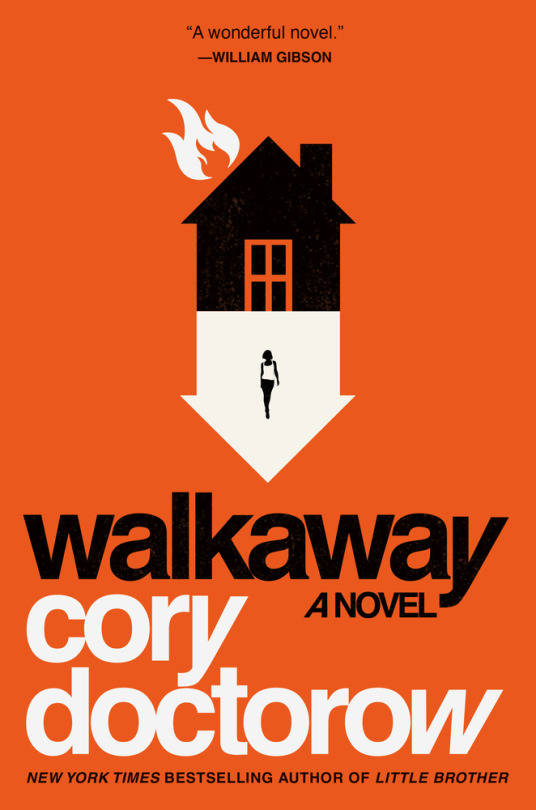
Over at Crooked Timber, Henry Farrell and others recently held a book seminar to discuss Cory Doctorow’s Walkaway. The symposium led to an extended discussion between Henry, Cory, Henry again, and Yochai Benkler about Benkler’s early work on commons-based peer production, spaces of resistance in the contemporary information economy, and the state of peer production a little over fifteen years since Benkler introduced the term. This (far too long) post summarizes some of their key points as a way of starting to collect my own thoughts on these questions.

I haven’t read Walkaway yet (downloaded my DRM-free digital copy, but the fiction slot in my brain is currently occupied by Philip Pullman’s totally engrossing La Belle Sauvage), but I can’t wait to get to it. Cory says the book started as an exercise in projecting how the sociotechnical transformations Benkler laid out in Coase’s Penguin might facilitate the spread of utopian energies at the periphery of radically unequal societies not so different from our own:

It’s been 15 years since Benkler made the connection between “commons-based peer-production” and Coase…

Down and Out in the Magic Kingdom projected Slashdot karma and Napster superdistribution across a whole society as a way of illuminating the strengths and weaknesses of both. Walkaway tries to do the same with commons-based peer-production: what would a skyscraper look like if it was a Wikipedia-style project? How about a space program?

As a Coasean tale, Walkaway is one the battleground between the technological, Promethean left—which has promised to lift peasants up to the material comfort of lords—and the de-growth green left, which promises to bring lords down to the level of the peasants in the name of saving the planet.

and later:

This is (in my view) a Utopian vision. It supposes that the Bohemian projects that even the most buttoned-down societies allow at their margins can breed real discontent and nurture and sustain it into something that genuinely challenges its host… They provided real-world lessons on which tactics worked and where the weaknesses were. They were battles, not the war. The only thing more extraordinary than a social justice prevailing at all is for it to prevail on its first outing, or second, or third.

In his contribution to the seminar, Henry points to Cory’s assumption that “exit” (in Hircshman’s sense) remains viable in a society pervaded by vast power inequalities, surveillance capabilities, and an (increasingly weaponized) disregard for privacy:

Again, Doctorow’s book isn’t an exercise in predictive science – he’s not saying that things will be so. But he is saying, I think, that things could and should be so, or sort-of so. Walkaway is quite unashamedly a didactic book in the way that earlier books such as Homeland were didactic – he has a very clear message to get across. In conversations with Steve Berlin Johnson years ago, I came up with the term BoingBoing Socialism to refer to a specific set of ideas associated with Doctorow and the people around him – that free exchange of ideas unimpeded by intellectual property law and the like, together with transformative technologies of manufacture, could open up a path towards a radically egalitarian future. Unless I’m seriously mistaken (in which case I’m sure that Doctorow will tell me), Walkaway wants to do two things – to argue for why such a future might be attractive, and to suggest that something like this future could be feasible.

For Henry, the implications boil down to questions of power and the role powerful entities play in shaping the lives of even the most peripheral, socially excluded groups within a society. He also (later on) expresses skepticism at the political prospects of the revolutionary vision of “BoingBoing Socialism” that adopts a rhetoric of contingency and self-marginalization as its platform for change.

Ronald Coase. 2003, U of Chicago Law School.

In a followup post, Henry elaborates a claim that Benkler engaged in a sort of naive Coasean disregard for power relations when he laid out the definitional statements on peer production. Henry says Benkler emphasized transaction cost and efficiency-centric explanations for the potential of peer production to substitute for firm or market-based modes of knowledge production and exchange:

Power relationships often explain who gets what, and which forms of organization are taken up, and which fall by the wayside. In general, forms of production that are (a) more efficient, but (b) inconvenient or unprofitable for powerful actors, are probably not going to be taken up, since those powerful actors will block them. Yet if one starts from an efficiency perspective, it is very hard to build power relations in, since one believes that change in practices and institutions is not driven by power relations but by efficiency.

and later:

What this means, if you take it seriously, is that Coaseian coordination is a special case of bargaining. Broadly speaking, Coaseian processes will lead to efficient outcomes only under very specific circumstances – when the actors have symmetrical breakdown values, as in the first game, so that neither of them is able to prevail over the other. More simply put, the Coase transaction cost account of how efficient institutions emerge will only work when all actors are more or less equally powerful. Under these conditions, it is perfectly alright to assume as Coase (and Benkler by extension) do, that efficiency considerations rather than power relations will drive change. In contrast, where there are significant differences of power, actors will converge on the institutions that reflect the preferences of powerful actors, even if those institutions are not the most efficient possible.

and finally:

In short – we need to distinguish between the rhetorical claims that technological change will bring openness along with it, and the (far more sustainable) claim that technology will probably only have openness enhancing benefits in a world where we are already dealing with the underlying power relations.

Benkler responds that Farrell is right to question his (Benkler’s) approach to power, but wrong in that the failure of his (Benkler’s) arguments in Coase’s Penguin and The Wealth of Networks is not driven by naive Coaseanism, but a different dimension of power entirely:

My primary mistake in my work fifteen years ago, and even ten, was not ignoring the role of power in shaping market patterns, but in understating the extent to which the new “market actors who will build the tools that make this population better able…” will themselves become the new incumbent market actors who will shape the environment to increase and lock-in their power. That is certainly a mistake in reading the landscape of power grabs, and I have tried to correct over the intervening years, most recently by offering a map of what has developed in the past decade…

In other words, today’s Benkler argues that yesterday’s Benkler underestimated the adaptive capacities of various incumbent powers as well as the way that a continuously shifting technical, regulatory, and political environment would alter the landscape along the way.

All of this speaks to an ongoing conversation Mako and I have been having about the past, present, and future of peer production. A pessimistic account might run like this: peer production thrived from ~1995-2008 in part because incumbent firms and private actors had not figured out how to capitalize on the possibilities for community-based provision of resources unlocked by the diffusion of digitally networked communications infrastructure. Now that increasing numbers of firms have done so, there is no going back. Large firms as well as their venture-funded spawn will continue to eat peer production communities’ lunch, undermining their viability as well as their autonomy. Peer production as we know it will eventually disappear, becoming a curious relic of a more naive era when the electronic frontier remained an unsettled, experimental space.

Another possibility, arguably more optimistic, can be seen in Benkler and Doctorow’s contributions to this exchange. Rather than consigning peer production to the dustbin of history, they both suggest that room for maneuver (or “degrees of freedom” in Benkler’s terms) will remain at the margins of the networked information economy and that communities of “walkaways” may persist in experimenting with “real utopian” autonomous alternatives to the more extractive, winner-take-all models of “supercapitalist” knowledge production and exchange. Doctorow’s fiction seems to explore the (hopeful) potential of these walkaway communities to generate radical, systematic transformation. Benkler, in his more recent writings, holds out some hope, but of a highly contingent, tenuous, and circumscribed sort.

The original posts are worth a read.

Ants!

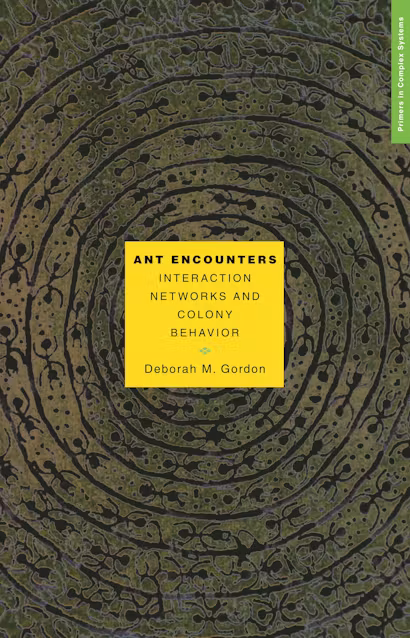
I recently read Deborah M. Gordon’s Ant Encounters and thought I’d summarize some thoughts about it. Gordon is a Professor of Biology at Stanford. The book pulls together several decades of research (hers and others’) on the behavior and ecology of ants. In it, Gordon makes nuanced claims about the importance of communication and interaction for distributed collective behavior in clear, non-technical language. Many of the findings should inspire people (like me) interested in understanding the organization of collective behavior in humans.

Gordon argues that ant behavior and colony dynamics encompass a complex system driven by patterns of interactions, information exchange, and environmental influences. She contrasts this with more deterministic accounts of ants prevalent in earlier scientific literature and popular culture. Gordon emphasizes how ants operate by behavioral heuristics and information processing rather than a fixed set of rules or genetically encoded traits.

Picture of an argentine ant
Argentine ant (cc-by-sa, Penarc, Wikimedia Commons)

Consider the division of labor within an ant colony. The prevailing (wrong) view depicts ants born into a pre-specified, genetically determined “caste” which has a clearly-defined task within a hierarchically structured colony. Following this story, the Queen of the colony births out larva who grow into task-specialized sterile adults. Individuals within each caste supposedly possess physical traits that support their specialization as foragers, trash removers, larva-tenders, patrollers, or whatever. Each individual supposedly pursues their specialized task tirelessly until death.

It turns out that this account reflects a mixture of reasonable misinterpretation and fantastical thinking. First off, Gordon notes, ants change tasks within their life course. Today’s larva-tender may be tomorrow’s forager. These changes do not entail biological changes within each ant (although there seems to be evidence that ants do tend to adopt specific tasks at specific stages of their lives within a colony), but instead reflect responses to interactions with other members of the colony and external forces shaping those interactions. In a younger, less populous colony, ants may change tasks in response to immediate needs and threats that arise suddenly. In larger, more mature colonies where things are less likely to change suddenly, many ants may have more stable activities. Some ants in large colonies even literally sit around doing nothing because the information they receive from their nest-mates indicates that the colonies needs are being met. None of this is fixed by genetic encoding or hierarchical commands.

Second, Gordon shows how ants respond probabilistically to local stimuli. Individual ants, it turns out, act a lot like heuristic distributed sensors or nodes in a communications network—each with some likelihood of changing its behavior depending on the feedback it receives from its environment. They are not automatons with deterministic programming to pursue a single-minded course of action.

Third, Gordon shows how colonies as a whole change in reaction to their environments and collective interactions. If one colony finds itself in proximity to another, the individuals within it may alter how much collective effort is dedicated to specific tasks depending on the species, size, and temperament of its neighbors. Individual ants respond to the number of nest-mates and neighbors they encounter. If their last ten encounters were with foragers from their home nest returning with food to feed the larval brood, they may continue to go about their business uninterrupted. As the portion of recent interactions includes outsiders or nest-mates responding frantically to an unwelcome intruder of some sort, the probability rises that the next ant will change its behavior in response (maybe to start running around in a panic or bite an intruder).

A picture of harvester ants
Harvester ants collecting seeds (cc-by-sa Donkey Shot, Wikimedia Commons)

Through many examples, Gordon conveys how patterns of collective ant behavior emerge and adapt to local circumstances without a centralized coordination mechanism or hierarchy of control. She describes this almost entirely without recourse to the jargon of complexity theory or complex systems research.

A concrete, measured, and example-driven account of how actually existing complex systems work is maybe the most impressive achievement of the book. Many texts discuss complexity in human and ecological systems, but none that I have read do so with the clarity of Ant Encounters. While I should read more books on these topics, more people in my little corner of the research world should read Gordon’s work too.

Ant Encounters ultimately left me excited to pursue some of the potential extensions and connections between Gordon’s work and research on human social systems and organizations. For example, I’d love to follow up on her comment that higher interaction frequency is associated with colony growth or survival (I currently forget which). Would such a finding hold up in the context of human organizations? If so, what would it look like and mean in the context of building effective peer production systems? Gordon has also written elsewhere about some of the potential connections between ant behavior, human organization, communication protocols. Recent findings from Gordon and her collaborators show how ants follow a set of behavior protocols very similar to those encoded in the TCP specification (apparently, she likes to refer to this idea as “the Anternet“). I’m eager to read more of the scientific publications from Gordon and her collaborators to understand these ideas more deeply and to see how well they travel when applied to a species I know a little bit more about.

OpenSym 2017 Program Published

A few hours ago, OpenSym 2017 kicked off in Galway. For those that don’t know, OpenSym is the International Symposium on Wikis and Open Collaboration (it was called WikiSym until 2014). Its the premier academic venue focused on research on wikis, open collboration, and peer production.

This year, Claudia Müller-Birn and I served as co-chairs of the academic program. Acting as program chair for an ACM conference like OpenSym is more like being a journal editor than a conference organizer. Claudia and I drafted and publicized a call for papers, recruited Associate Chairs and members of a program committee who would review papers and make decisions, coordinated reviews and final decisions, elicited author responses, sent tons of email to notify everybody about everything, and dealt with problems as they came up. It was a lot of work! With the schedule set, and the proceedings now online, our job is officially over!

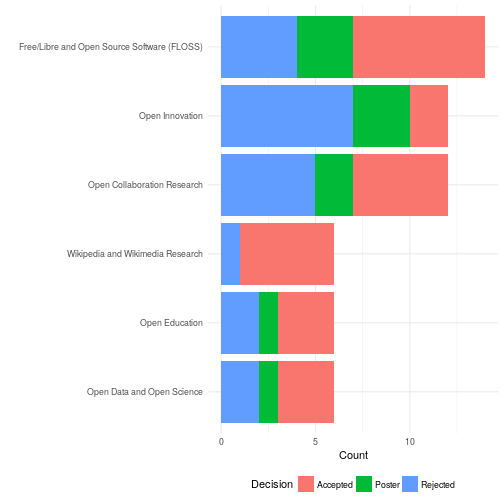
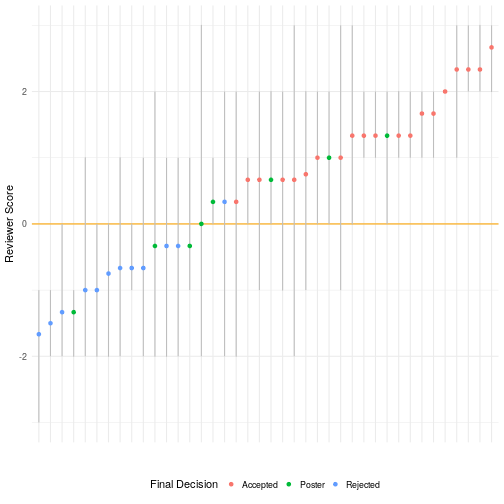
OpenSym reviewed 43 papers this year and accepted 20 giving the conference a 46.5% acceptance rate. This is similar to both the number of submissions and the acceptance rates for previous years.

In addition to papers, we received 3 extended abstracts for posters for the academic program and accepted 1. There were an additional 7 promising papers that were not accepted but whose authors were invited to present posters and who will be doing so at the conference. The authors of posters will have extended abstracted about their posters published in the non-archival companion proceedings.

The list of papers being published and presented at OpenSym includes:

The following extended abstracts for posters will be published in the companion to the proceedings:

There was also a doctoral consortium and a non-academic ”industry track” which Claudia and I weren’t involved in coordinating.

As part of running the program, we tried a bunch of new things this year including:

  • A move away from separate tracks back to a singlec combined model with Associate Chairs.
  • Bidding for papers among both Associate Chairs and normal PC members.
  • An author rebuttal/response period where authors got to respond to reviews and reviewers.
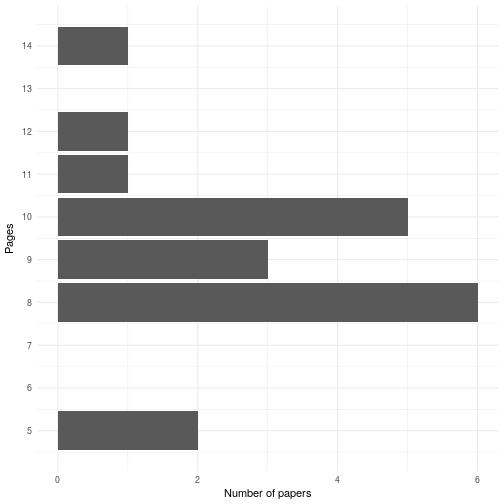
  • An elimination of page limits for papers. This meant that the category of notes also disappeared. Reviewers were instructed to evaluate the degree to which papers’ contributions were commensurate to their length.

I’m working on a longer post that will evaluate these changes. Until then, enjoy Galway if you were lucky enough to be there. If you couldn’t make it, enjoy the proceedings online!

You can learn more about OpenSym on it’s Wikipedia article on the OpenSym website. You can find details on the schedule and the program itself at its temporary home on the OpenSym website. I’ll update this page with a link to the ACM Digital Library page when it gets posted.

Testing Our Theories About Surviving an “Eternal September”

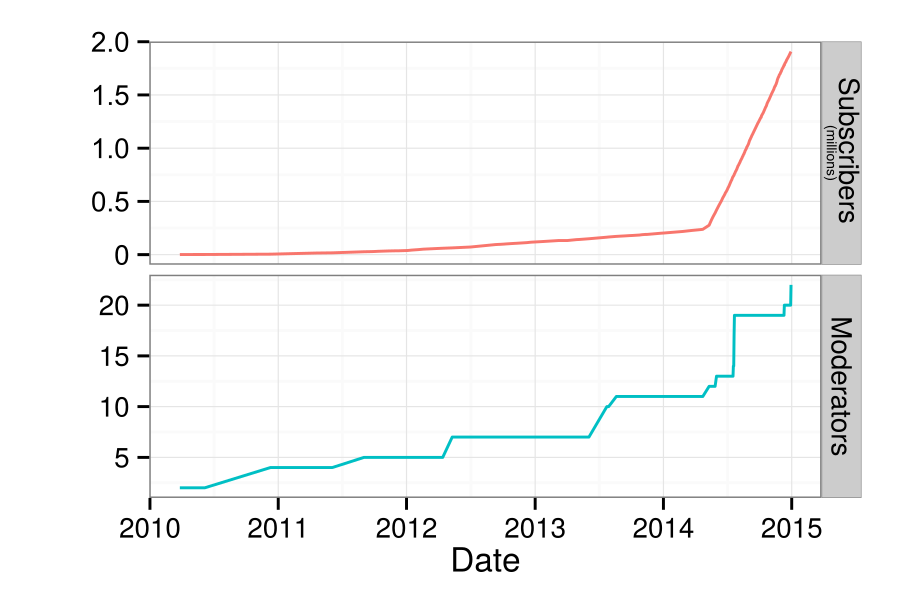
Graph of subscribers and moderators over time in /r/NoSleep. The image is taken from our 2016 CHI paper.

Last year at CHI 2016, we published a qualitative study examining the effects of a large influx of newcomers to the /r/nosleep online community in Reddit. Our study began with the observation that most research on sustained waves of newcomers focuses on the destructive effect of newcomers and frequently invokes Usenet’s infamous “Eternal September.” Our qualitative study argued that the /r/nosleep community managed its surge of newcomers gracefully through strategic preparation by moderators, technological systems to reign in on norm violations, and a shared sense of protecting the community’s immersive environment among participants.

We are thrilled that, less a year after the publication of our study, Zhiyuan “Jerry” Lin and a group of researchers at Stanford have published a quantitative test of our study’s findings! Lin analyzed 45 million comments and upvote patterns from 10 Reddit communities that a massive inundation of newcomers like the one we studied on /r/nosleep. Lin’s group found that these communities retained their quality despite a slight dip in its initial growth period.

Our team discussed doing a quantitative study like Lin’s at some length and our paper ends with a lament that our findings merely reflected, “propositions for testing in future work.” Lin’s study provides exactly such a test! Lin et al.’s results suggest that our qualitative findings generalize and that sustained influx of newcomers need not doom a community to a descent into an “Eternal September.” Through strong moderation and the use of a voting system, the subreddits analyzed by Lin appear to retain their identities despite the surge of new users.

There are always limits to research projects work—quantitative and qualitative. We think the Lin’s paper compliments ours beautifully, we are excited that Lin built on our work, and we’re thrilled that our propositions seem to have held up!

This blog post was written with Benjamin Mako Hill. Our paper about /r/nosleep, written with Mako Hill and Andrés Monroy-Hernández, was published in the Proceedings of CHI 2016 and is released as open access. Lin’s paper was published in the Proceedings of ICWSM 2017 and is also available online.

Searching for competition on Change.org with LDA topic models

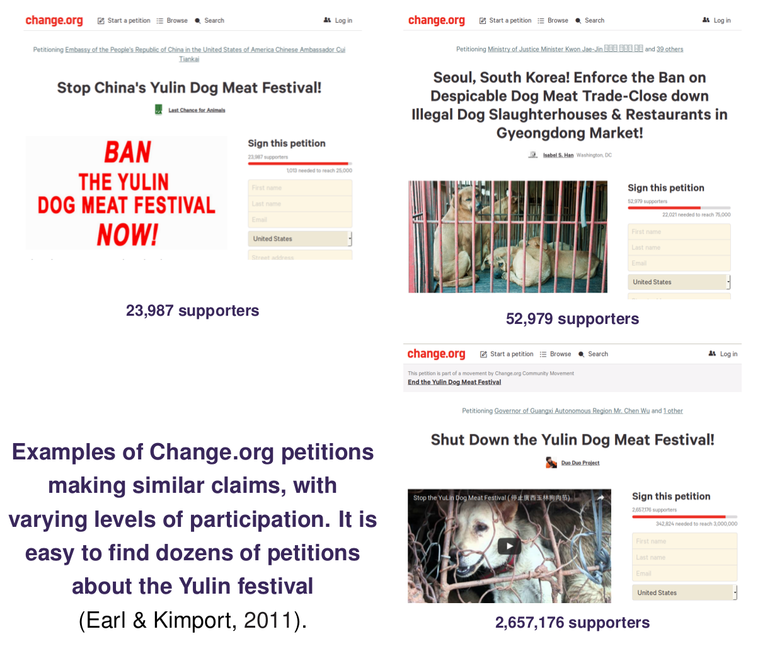
You may have heard of Change.org. It’s a popular online petitioning platform. You may have even noticed there can many online petitions about popular topics. For instance, it is easy to find dozens of petitions protesting the Lychee and Dog Meat Festival with varying levels of support.

Imagine you want to start an online petition. You might worry if your petition is very similar to other people’s petitions that already have signatures. These other petitions have a head start and will get all the attention. That said, if nobody has made any similar petitions, maybe that’s because the issue you are petitioning about doesn’t yet have a lot of popular support. You might also worry if your petition is unusual. Which of these two worries (making a duplicate petition and making a petition no one cares about) should concern you, dear petition creator? In my research, I set out to answer this question. The project is still in progress. I recently presented it as a poster at CSCW ’17.

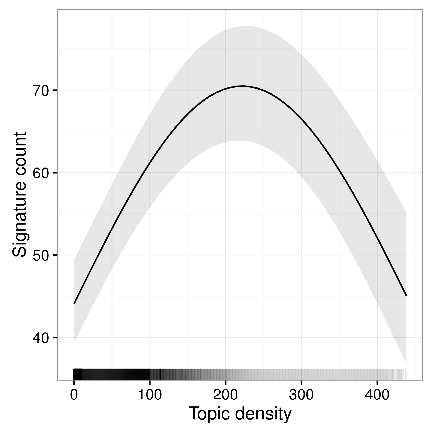
Sociologists of organizational ecology considered similar questions about businesses and social movement organizations. They wanted to explain why organizations were more likely to die when an industry was young or old, but less likely to die in between. They argued that density, or the number of organizations in the population, was tied both to processes of legitimation and competition. There aren’t many firms in unproven industries because it’s not clear the industry will succeed, but when an industry is mature it becomes competitive. Everybody wants a piece of the pie, but you might not get enough pie to survive! This notion is called density dependence theory.

I think it is intuitive to apply this logic to online petitions and topics. If you make a petition about a low-density topic, chances for success should be lower because the petition is more likely to be unusual or illegitimate. However if you make a petition in a high-density topic, now you have to worry about competition with all the other petitions in the topic. You want your petition to be original, but not weird!

To collect data to test this theory, I downloaded a large set of petitions from Change.org, spam filtered them, and removed very short ones. Next I used LDA topic modeling to group petitions into topics. This makes it possible to assign petitions to points in a topic space. The more crowded this part of topic space, the denser the petition’s environment.

Finally, I used a regression model to predict petition signature counts. Since density dependence theory predicts that the relationship between density and signature count is shaped like an upside-down U, I included a quadratic term for density. The plot below shows that observed relationship between density in topic space and signature count is what the theory predicted. The darkness of the lines at the bottom of the plot show that most petitions are in less dense parts of topic space.  So you, dear petition creator, should worry about competition and legitimacy, but worry about legitimacy first!

I’m excited by this result because it shows interesting similarities between efforts to organize coordinated activism online and traditional organizations like firms. I’m planning to apply this method to other forms of online coordination like wikis and online communities.

This blog-post and the work it describes is a collaborative project between Nate TeBlunthuis, Benjamin Mako Hill and Aaron Shaw. We are still at work writing this project up as a research article. The work has been supported by the US National Science Foundation

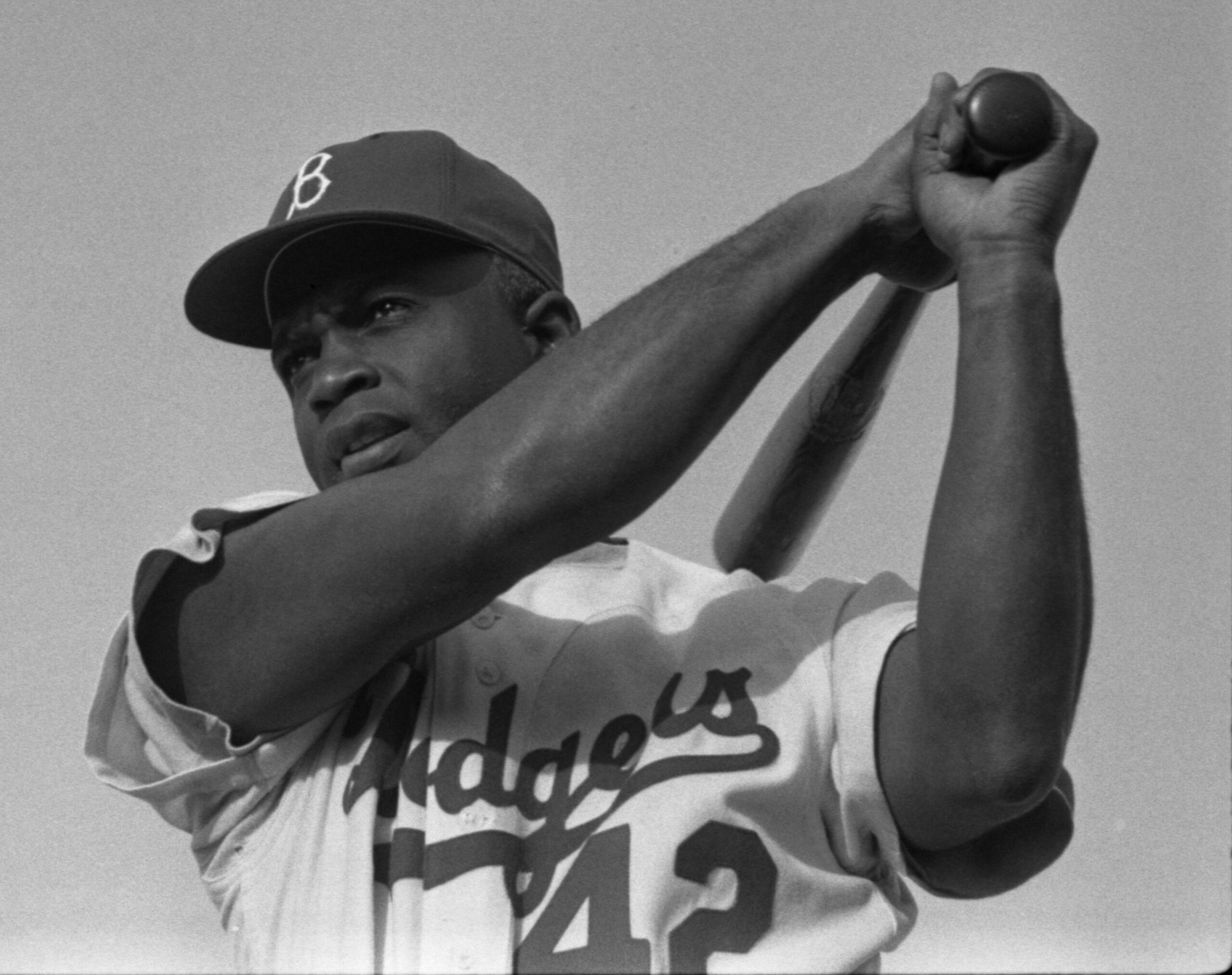
Jackie Robinson Day (Re-estimated)

When major league baseball held its opening day on April 15 in 1947, a 28 year-old infielder made his highly-anticipated debut at first base for the Brooklyn Dodgers. He would go on to record an extraordinary season and career worthy of induction into the Baseball Hall of Fame, winning Rookie of the Year honors in 1947, a batting title and Most Valuable Player award in 1949, and a World Series title in 1955. He also produced two seasons that rank among the top 100 ever (by the metric of Wins-Above-Replacement among position players).

Jackie Robinson (1954 public domain photo by Bob Sandberg for Look Magazine).


Looking at the box score, Jackie Robinson didn’t make an overwhelming impact on the outcome of his first game, but his presence on the field challenged the racist status quo of professional baseball and American society. What’s more, the intense public-ness of the challenge made Robinson’s presence a symbol and a spectacle: of the roughly 26,500 spectators in attendance at Ebbets field, an estimated 14,000 were black. I cannot imagine what it was like to be at that game — one of those rare places and moments where it becomes possible to see an historic social transformation as it unfolds. Just the thought gives me goosebumps.

Every major league player, coach, and umpire will don Robinson’s iconic number 42 in recognition today. Watching games and highlights from Jackie Robinson Days past, I’ve been troubled by how easily such observances drift into a hagiographic reverie that sometimes even take on a self-congratulatory tone. Stories of Robinson’s incredible athletic and personal accomplishments sometimes efface his struggle against horrible, violent, and aggressive responses. Worse yet, the stories usually play down the persistence of racism and its effects today. Baseball celebrates Jackie Robinson Day out of a strange combination of guilt and pride; knowledge and ignorance; resistance and complicity.

As I indicated earlier, Robinson’s performance and impact qualified him for the Hall of Fame along multiple dimensions. However, another way to think about his unique contribution to baseball is to consider how such virulent racism likely affected his play and how unbelievably, mind-blowingly great a player he might have been under less racist conditions.

There’s no obviously valid way to construct a counterfactual Jackie Robinson, but research on the phenomenon of stereotype threat suggests a very simple, naive statistical adjustment strategy. To paraphrase a bunch of scholarly studies and the (pretty extensive) Wikipedia article, stereotype threat reduces the performance of individuals who belong to negatively stereotyped groups, largely by inducing feelings of anxiety.

Stereotype threat affects various kinds of behaviors including athletic achievement. A 1999 study by Jeff Stone and colleagues (pdf) estimates the effects of some typical forms of stereotype threat on a sample of black men’s athletic performance, reporting that race-based priming resulted in a 23.5% worse outcome on a miniature golf (!) task than a control condition with no priming.

Consider that the priming in this Stone et al. study was done in a fairly polite, impersonal, non-hateful, non-threatening way in relation to a mini-golf task with absolutely nothing at stake. Consider just how personal, vitriolic, and violent the responses to Jackie Robinson were — many of them coming directly from opposing players and “fans” who went to great pains to heckle him in the middle of at-bats, physically target him with violent slides and more on the field, or issue death threats to him and his family. Consider how much Robinson had at stake and just how public his successes and his failures would have been.


Some people may like to imagine (and filmmakers may like to depict) that the hatred helped to motivate and focus Robinson, spurring him to even greater performance. Similarly, part of the mystique of the greatest athletes is that they seem to empty their heads of all the noise and distractions that would debilitate the rest of us at precisely those moments when the stakes and pressures are highest. It’s easy to say that Robinson didn’t respond to the pressure in the same way as most humans would, but the research on stereotype threat suggests that it probably affected him on the field anyway. Just being reminded — even in very subtle, socially-coded ways — that you belong to a socially excluded group reduced athletic performance by nearly a quarter. The sort of cognitive burden that comes along with being singled out and targeted by the kind of racial hatred that Robinson experienced must be orders of magnitude greater. What sort of impact would this burden have had on Robinson’s play?

Now, go look at the stat lines again from those two spectacular seasons (1949, WAR 9.6,  and 1951, WAR 9.7) that Robinson had and imagine them without the stress, the pain, the distraction of all that hate. Be a little bit generous and inflate the WAR statistics by the same 23.5% that Stone et al.’s subjects performance dropped in a laboratory study in ridiculously low-key conditions. Under these assumptions, Robinson’s two greatest seasons might have yielded WAR of 11.9 and 12.0 respectively — easily placing them both among the top 10 seasons by a position player ever.

Dogfooding

This quarter, I am teaching a graduate seminar called “The Practice of Scholarship” that is required for second-year students in the Northwestern MTS and TSB programs. Following Mako’s lead, I am using the Community Data Science Collective wiki to host the (editable) syllabus. In other words, I am eating to my heart’s content.

dog food.
© 2006 chrismetcalfTV (cc-by-2.0)

We had our first class session yesterday and it went really well. The goal for the quarter is for every student to prepare a manuscript for submission to a peer reviewed venue. I told the students that the course will serve as a hybrid writing boot camp and extended group therapy session. There will be much workshopping and iteration and sharing of feelings. There will also be polite, friendly, and unyielding pressure to produce scholarly work of exceptional quality.

In keeping with the wikified ethos, much of the course schedule remains tbd at this point, so please drop me a line with comments, suggestions, or pointers to great readings that brilliant, interdisciplinary, empirical social scientists and HCI researchers like my students would appreciate.

Back in the blogging game

Hello world! It’s been a while since I’ve done any blogging, but I’ve been wanting to return for some time now, so here we are. My old blog was a hodge podge that hovered at the edges of my research. Current events featured prominently, especially those having to do with governance in online communities, knowledge production and access, and research ideas. I have a few different goals for this blog.

Sunrise-LakeMichigan-2014-10-8
A new day dawns for blogging on the shores of Lake Michigan…

 First, since it’s part of the Community Data Science Collective site, I plan to talk about our research, affiliates, community events, and related topics. Second, I want to use the blog as a space to sketch out research ideas more regularly. When I blogged previously, I was a graduate student. I had more unstructured time in which to brainstorm and reflect. The transition to faculty and the subsequent accumulation of responsibilities, projects, students, and commitments has left me seeking time to think broadly and with less structure. I need a semi-structured space and time to do so. As a result, I return to blogging.

This relates to a third goal: a minimum of one post per week. In the old days, Mako coordinated the Cambridge instance of Iron Blogger, a group blogging accountability project in which all the participants agreed to write one post per week or pay $5 into a common pot (that we then used to throw a party whenever it got big enough). The incentives sound misaligned, but the semi-public commitment, a deadline, and the nominal material cost of failure got a weekly post out of me roughly 90% of the time.

There is no iron blogger group in Chicago (yet?), but I’m going to recreate the structure with a little public accountability infrastructure with some friends. So far, Rachel and I have committed to posting weekly and tracking our posts. If others want to join, we can add further infrastructure as needed. No fines for now, but if I fail to post frequently between now and the end of the academic year, I’ll revisit.

Finally, since I do a lot more mentoring and teaching now than I used to, I imagine that these activities will occupy a fair amount of my attention as well. I feel more comfortable publishing material about my teaching now than when I first started at Northwestern. I am also realizing that my approach to teaching would lend itself really well to blogging as I am continually tinkering with the structure of my assignments, readings, evaluations, and lessons. A space to reflect on my experiences more actively and to solicit feedback from students and others seems like a helpful thing.

That’s it for this opening post. Thanks for reading.